
Natural Rubber Sourcing: How to Reduce Supplier Risk and Secure Reliable Supply
For tire manufacturers and rubber product companies, the biggest sourcing risk is not always a price increase. It is discovering that a supplier cannot deliver when the material is needed.
A supplier may offer an attractive price but lack reliable access to raw materials. A shipment may arrive late, product quality may vary between batches, or an established supply channel may suddenly become unreliable.
The consequences go beyond higher purchasing costs. Companies may face emergency procurement, rising inventory expenses, production delays and missed customer commitments.
These risks deserve closer attention as the natural rubber market faces a more constrained supply outlook.
The Association of Natural Rubber Producing Countries (ANRPC) revised down its 2026 global natural rubber production forecast to approximately 15.04 million tonnes, representing year-on-year growth of just 0.6%. Production in Indonesia, Malaysia and Vietnam was also forecast to decline.
These figures are forecasts, not final production results, and they do not necessarily indicate an imminent shortage. However, they provide a reason for procurement teams to reassess their sourcing strategies.
The key question is no longer simply where to buy natural rubber at the best price. It is whether suppliers can deliver the right material, in the right quantity, at the right time.
1. Supplier Selection: Look Beyond Price and Product Specifications
When evaluating a natural rubber supplier, procurement teams should assess three fundamental factors.
Actual supply capacity
A quotation does not prove that a supplier has reliable access to sufficient raw materials.
Buyers should understand where the rubber originates, whether the supplier works directly with processors or upstream producers, and how much supply depends on a single source.
For traders and intermediaries, it is particularly important to distinguish between established sourcing relationships and supply that depends on short-term market availability.
Consistent product quality
Natural rubber quality can vary by grade, origin, processing method and batch.
Buyers should verify product specifications, testing procedures and quality-control practices. Initial sample approval should be followed by routine checks on subsequent shipments.
Delivery and fulfillment performance
A reliable supplier should be able to explain its production or sourcing capacity, inventory arrangements, delivery lead times and contingency plans.
Historical delivery performance and the ability to respond to unexpected disruptions are often more useful indicators than company size or a competitive quotation alone.
2. Diversify Supply Sources Without Creating False Security
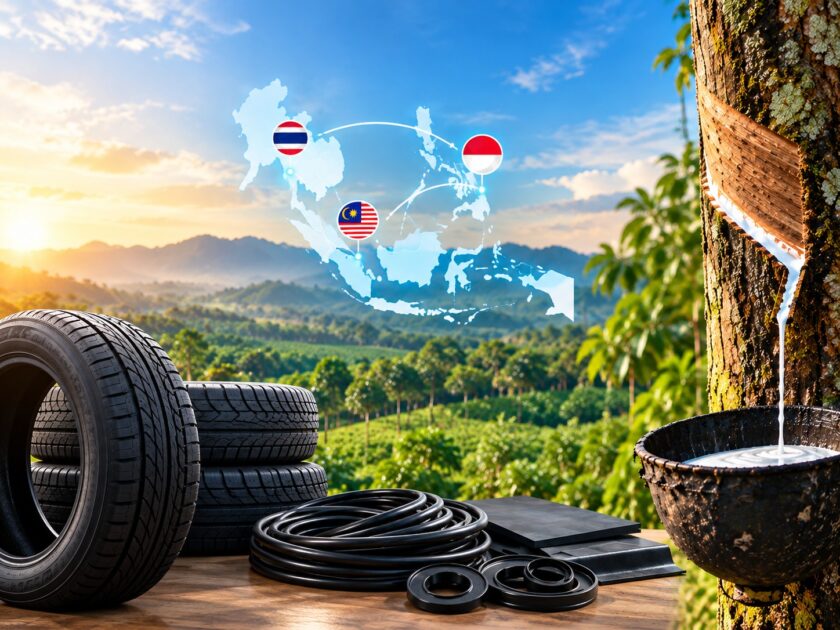
Thailand, Indonesia and Vietnam are important participants in the natural rubber supply chain. Exploring suppliers across these markets can help buyers reduce dependence on individual companies or sourcing channels.
However, adding more suppliers does not automatically reduce risk.
Several suppliers may depend on the same upstream processor, production region or logistics route. A disruption affecting that shared source could therefore affect all of them simultaneously.
A stronger sourcing strategy considers diversification at three levels:
- Geographic diversification: Assess suppliers across different production regions where commercially practical.
- Supplier diversification: Balance established suppliers with qualified alternatives.
- Supply-chain diversification: Understand upstream sourcing, processing capacity and transportation dependencies.
The objective is not to maintain the longest possible supplier list. It is to establish alternative sources that can genuinely provide suitable products when the primary supply channel is disrupted.
3. Verify Suppliers Before Committing to Long-Term Contracts
Public company profiles and online directories are useful starting points, but they rarely provide enough evidence to support a major procurement decision.
For strategic suppliers, buyers should conduct more detailed checks covering:
- Business registration, ownership and actual operating activities.
- Production facilities, warehousing and available supply capacity.
- Upstream sourcing relationships and dependence on third parties.
- Product specifications, testing capabilities and quality-control procedures.
- Export experience, delivery history and customer service.
- Contingency arrangements for supply disruptions.
The depth of verification should reflect the supplier’s importance, the value of the contract and the potential cost of a supply interruption.
Desktop research and interviews may be sufficient for initial screening. For high-value or strategically important suppliers, factory visits, warehouse inspections and direct discussions with relevant business partners can provide additional evidence.
The aim is to identify weaknesses before they become costly operational problems.
4. Build a Supplier Management System, Not Just a Supplier List
Supplier qualification should not end when a contract is signed.
Procurement teams can classify suppliers into three groups: core suppliers, qualified secondary suppliers and backup suppliers.
Core suppliers support regular purchasing requirements. Qualified alternatives provide additional capacity, while backup suppliers help maintain continuity when existing arrangements are disrupted.
Performance should be reviewed regularly using measurable indicators, including:
- On-time delivery rate.
- Product conformity and rejection rate.
- Order fulfillment and lead-time consistency.
- Responsiveness to quality or delivery problems.
- Ability to maintain supply during periods of market stress.
Companies should also monitor relevant developments in producing regions, including weather conditions, production forecasts, logistics constraints and changes in supplier operations.
This allows procurement teams to respond earlier rather than relying on emergency sourcing after a disruption has already occurred.
5. Evaluate Total Procurement Cost, Not Just the Quoted Price
The lowest quoted price does not necessarily translate into the lowest overall cost.
A supplier with inconsistent deliveries may force a buyer to hold additional inventory, pay for expedited transportation or purchase replacement material at unfavorable prices.
Quality problems can create further costs through inspection, production adjustments, rejected batches and customer complaints.
A more complete evaluation considers the purchase price alongside transportation, inventory requirements, quality risks, delivery reliability and the cost of switching suppliers.
For manufacturers operating with tight production schedules, a slightly higher price from a dependable supplier may be commercially preferable to a cheaper but less reliable alternative.
Why Southeast Asia Deserves Closer Supplier Assessment
Southeast Asia remains central to global natural rubber sourcing. Yet supplier capabilities, upstream relationships and operating conditions vary considerably across countries and individual companies.
For international buyers, the challenge is not simply identifying potential suppliers. It is determining which companies have verifiable operating capabilities, dependable access to raw materials and the capacity to support long-term procurement requirements.
This requires more than desk research alone.
YuanZhe Consulting (CRI) supports companies evaluating markets and business partners across Vietnam and Southeast Asia. Depending on the project, services can include supplier screening, company background verification, local market research, interviews and on-the-ground assessment of potential partners.
The objective is to help buyers make better-informed sourcing decisions before committing significant resources to a new supplier or market.
Conclusion: Supply Reliability Is a Procurement Advantage
A more uncertain supply outlook makes supplier management an increasingly important part of natural rubber procurement.
Companies that understand their upstream supply chains, verify supplier capabilities, diversify genuine sources of risk and monitor delivery performance are better positioned to respond when market conditions change.
The goal is not simply to find a supplier that can offer natural rubber today. It is to build a sourcing network that can continue delivering when conditions become more difficult.
For procurement leaders, that is the foundation of a more resilient natural rubber supply chain.